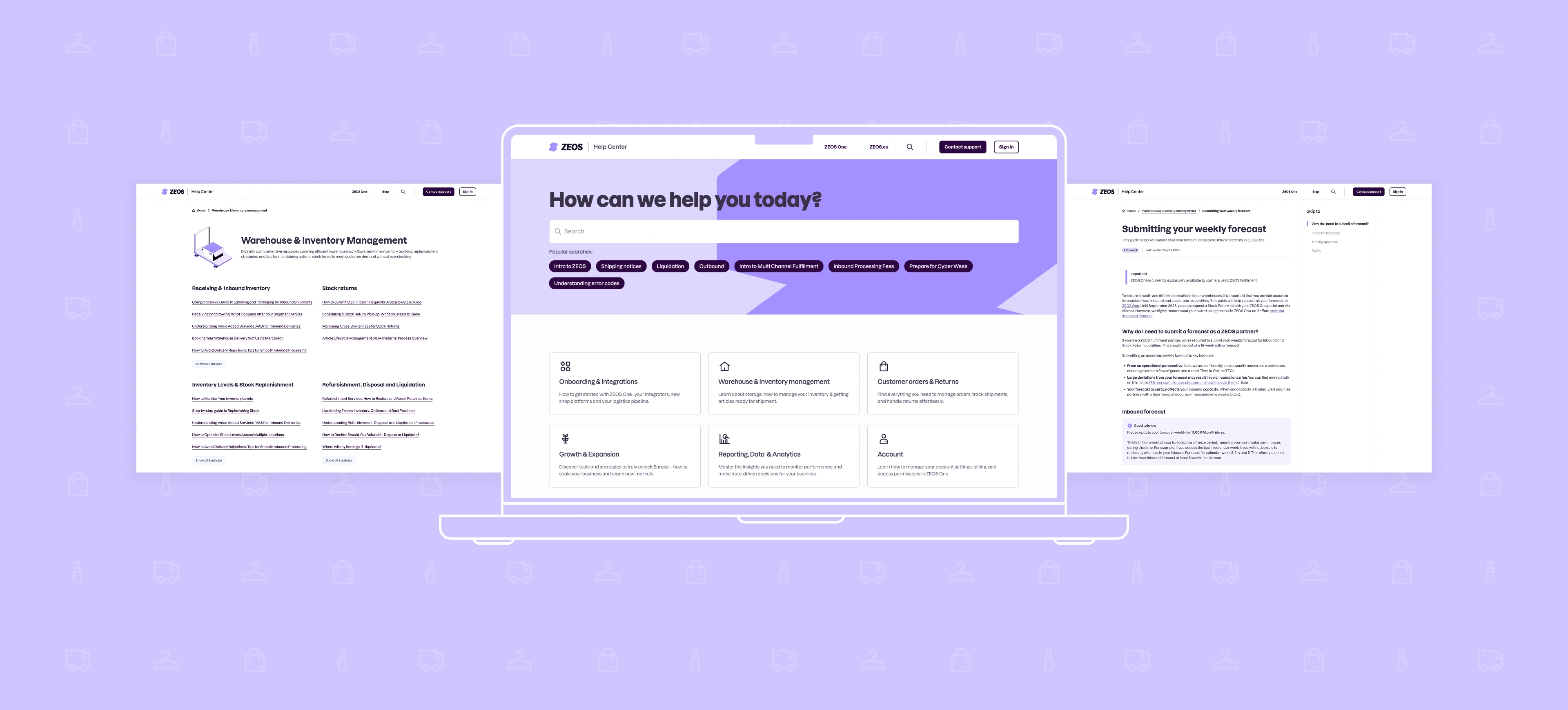
With the launch of ZEOS One, Zalando's multi-channel fulfillment portal, I led the design strategy for its support ecosystem,
working closely with product to define the vision and prioritize investments for how users would effectively reduce operational friction and unblock themselves to return to their day-to-day tasks.
We identified that a central, scalable help center acting as a knowledge base was the critical first step,
and I was responsible for its end-to-end design — from problem framing and user flows, to information architecture, stakeholder alignment and documenting final design components for engineering handover.
This new help center became the foundational enabler for all subsequent support capabilities,
including the ZEOS Developer Portal, support ticketing, and AI chat bot.
Team
Design & User research: Ingrid Ho, Claudine Dizon Liljedahl, Oscar Fredriksson.
Product & Engineering: Sharareh Shrabi, Alex Satour, Nikhil Prabhakar, Daniel Sharkov, Tatsiana Dziarhai, Md Tonoy Akanda, Nikola Kalinov Mihaylov.
With the introduction of ZEOS, Zalando’s Ecommerce Operating System, as an aggressive push into the B2B space, the immediate priority was enabling the multi-channel fulfillment services infrastructure and corresponding portal, ZEOS One. But logistics tools are only as reliable as the support systems behind them. While Zalando has spent a decade perfecting support for wholesale partners and consumers of the online fashion store, ZEOS required a completely different playbook to assist merchants operating businesses in Europe. Furthermore, as usage of the portal increases and more partners are onboarded, it's critical support teams won't become bottlenecks for partner's success.
To establish a baseline understanding of the support realm in the fulfilment landscape, I conducted a thoroguh competitive analysis to analyse the support capability offerings of industry leaders. A simplified summary of the capability analysis is displayed in the table below.
Capabilities
ShipbobS
FlexportF
HiveH
AmazonA
Help Center
x
x
x
x
University
o
x
o
x
Chat bot
x
x
x
x
Guides
x
x
o
x
Video tutorials
x
x
o
x
Forum
o
o
o
x
Webinars
x
x
x
x
Blog
x
x
x
x
Two Dimensions of Support
Together with my PM, Sharareh, and design partner, Ingrid, I categorized the support capabilities into two buckets: Education & Inspiration and Unblock & Self-Help. The former covers growth drivers like video tutorials and guides, while the latter focuses on resolution tools like forums and chatbots. We used these categories as axes to create a 2D graph, mapping competitors based on their investment levels in each area. This visual helped us align not just on where ZEOS and our competitors sit today, but exactly where we aim to be in two years time.
Education & Inspiration
Unblock & Self Help
Z
H
Z
S
F
A
A: Amazon
F: Flexport
S: Shipbob
H: Hive
Z: ZEOS
ZEOS in 2 years
ZEOS now
ZEOS’ support capabilities empowers merchants to resolve issues efficiently – ideally independently .
We strive to deliver a painless experience that inspires merchants, grows their business with them, that anticipates and reacts to their needs in every step of their journey with us.
Three Horizons Roadmap
To translate the high-level support vision above into execution, we defined a roadmap across three distinct horizons:
Zalando Partner Parity: Matching the baseline capabilities of the existing Zalando Partner Program. Since many ZEOS merchants migrate from this single-channel offering, maintaining a familiar support experience will be critical to reduce friction.
Competitive Parity: Moving beyond hygiene features to close the gap with market leaders. This phase requires the organization to scale operational resources and shift from a more reactive to proactive support.
Differentiate: Leveraging Zalando’s dominance in European fashion to build specialized support features that generic fulfillment providers simply can’t match.
1
Zalando Partner Parity
Help Center / Knowledge base
Support ticket creation + management
2
Competitive Parity
Chat bot / AI capabilities
Video tutorials
Courses
Webinars
3
Differentiate
Seamless contextual support
Community forum (peer-to-peer)
White glove services
Establishing the Foundation
With the competitor analysis complete and the three horizons roadmap defined, the immediate next step became clear: we needed a centralized Help Center. A robust knowledge base tailored for our multi-channel merchants which is more than just a content repository; it is the fundamental unlocking piece for our entire support strategy. Establishing this foundation would not only support (and house) future capabilities, but directly address our vision of merchant autonomy — empowering users to independently unblock themselves and therefore reducing reliance on manual support from our Customer Care and Partner Care teams for common queries.
High-Level Structure
In architecting the Help Center, it was important to take a systematic approach to ensure we could utilize the same structure and components for future, content heavy products on our roadmap,
like the ZEOS Developer Portal.
In essence, the experience is composed of four distinct modules: a Landing Page for triage and discovery, a Browse Page for categorical exploration,
Search Results for intent-driven navigation, and standardized Article Pages that serve as the final destination for all flows.
Landing Page
Article Pages
Browse
Search Results
0.0%
Mobile Access 1
0.0%
Search First 2
Data-Informed Decisions
It was crucial to build upon the learnings of the Partner Tech team following their recent redesign of the Zalando Partner University (the help center for single-channel partner program merchants mentioned earlier). Two specific findings piqued my interest and informed my design decisions. The first was mobile usage: while our ZEOS One portal and corresponding design system was optimised for desktop, about a quarter of Partner University visits actually happen on a mobile device. We simply couldn't neglect that volume of users, making a flexible layout from the get-go essential. Secondly, I analyzed visitor journeys and found that over half of users initiate their support journey through search. This made it clear that search couldn't just be a feature — it had to be a great and prominent experience.
¹ Percentage of total amount of visitors who accessed the Zalando Partner website from a mobile phone in June, 2025.
² Percentage of total amount of visitors who start off by searching when they land on the Zalando Partner University page.
Lo-fi Modular Prototype
Looking at best practice exemplars of different help centers out there, they all seemingly followed a certain formula; abig search bar, categories to browse from and a frequently asked questions section. To quickly test alternatives out, I created a modular, low-fidelity, prototype in Figma and invited the entire design & research team to play around with different versions and communicate their preferences.
https://help.zeos.eu/
Mix & Match
Explore a number of the layout variations we prototyped for the landing page.
Header
Search
Browse
FAQ
Extending the Design System
Once it was time to translate my designs into a higher fidelity state, it becaming evident that our design system components were optimised for tooling, and not text-heavy user interfaces like a Help Center. To address the shortcomings, I thoughtfully introduced a set of new components, optimized for responsiveness and legibility, and with the Content Management System integration in mind. Components that not only would be used for this portal, but also in the Developer Portal.
Info Callout
Good to know
The SLA for returns is 48 hours.
Sticky Nav
Introduction to Omnibus
Price Reduction Logic
Display Requirements
Global Market Exceptions
Compliance Timeline
Course
Getting started with ZEOS
Warning Callout
Warning
Window closes at 23:59.
Feedback
Found this article helpful?
Emphasis Block
Important
The CE label must be visible and recognizable.
Media Container
JPG, PNG, MP4
Article Card
Article Title
In rutrum donec commodo feugiat interdum sed imperdiet.
Download Module
Labelling guide (PDF)
Packaging guide (PDF)
Content Categorization
Structuring the Help Center was less about organising the first set of articles, and more about defining a structure that could scale with both the product and its users over time.
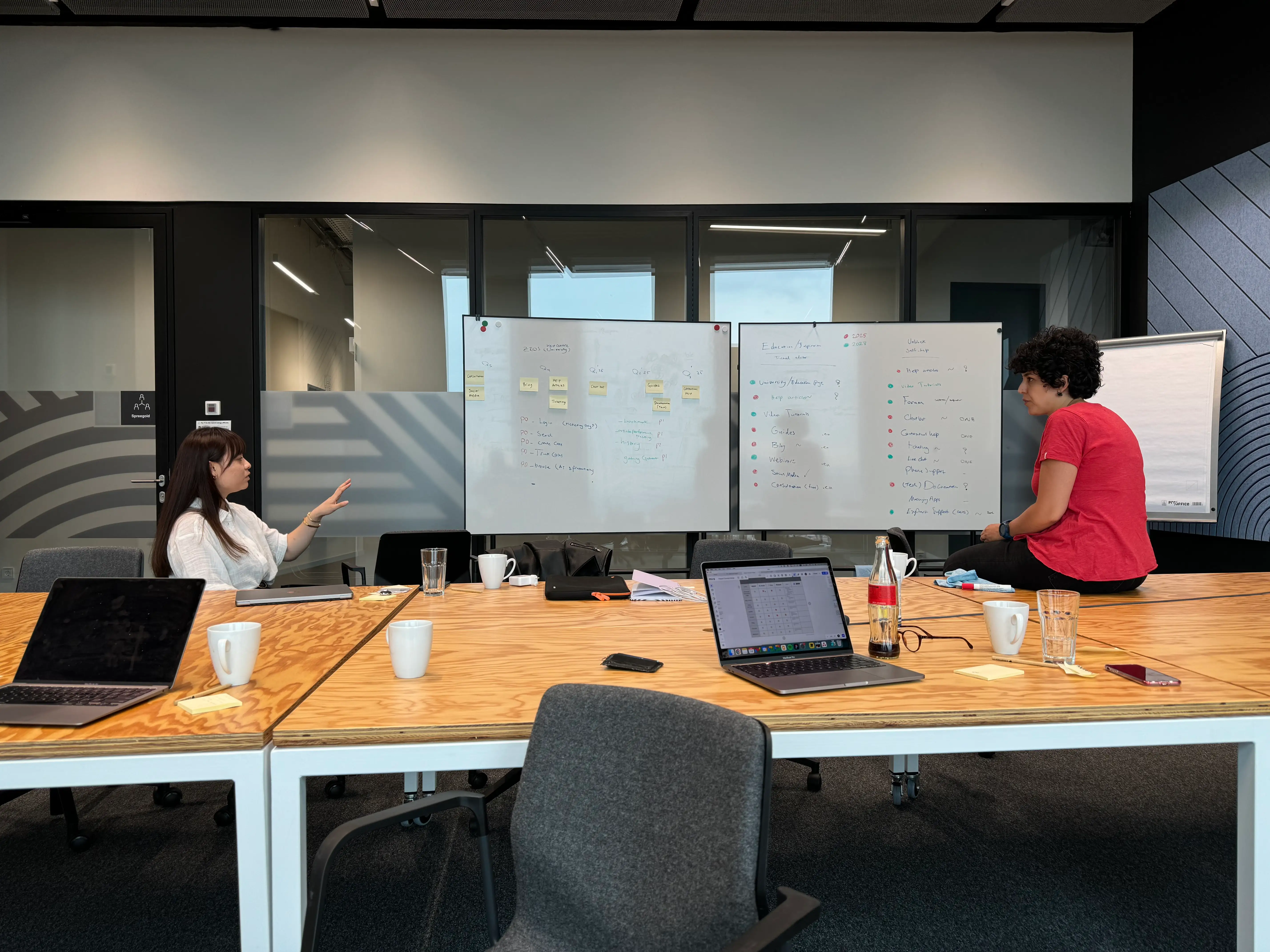
To establish a shared information hierarchy, I facilitated a series of card-sorting workshops with stakeholders from product, support, marketing, and design. The goal was not consensus for its own sake, but to surface differing mental models and negotiate a structure that could work across functions.
These sessions also exposed a larger organisational gap: content ownership. As a result, the work extended beyond the Help Center itself and triggered a re-evaluation of our product development process — introducing user documentation as a non-negotiable part of feature launches, something that had previously been overlooked.
Usability testing
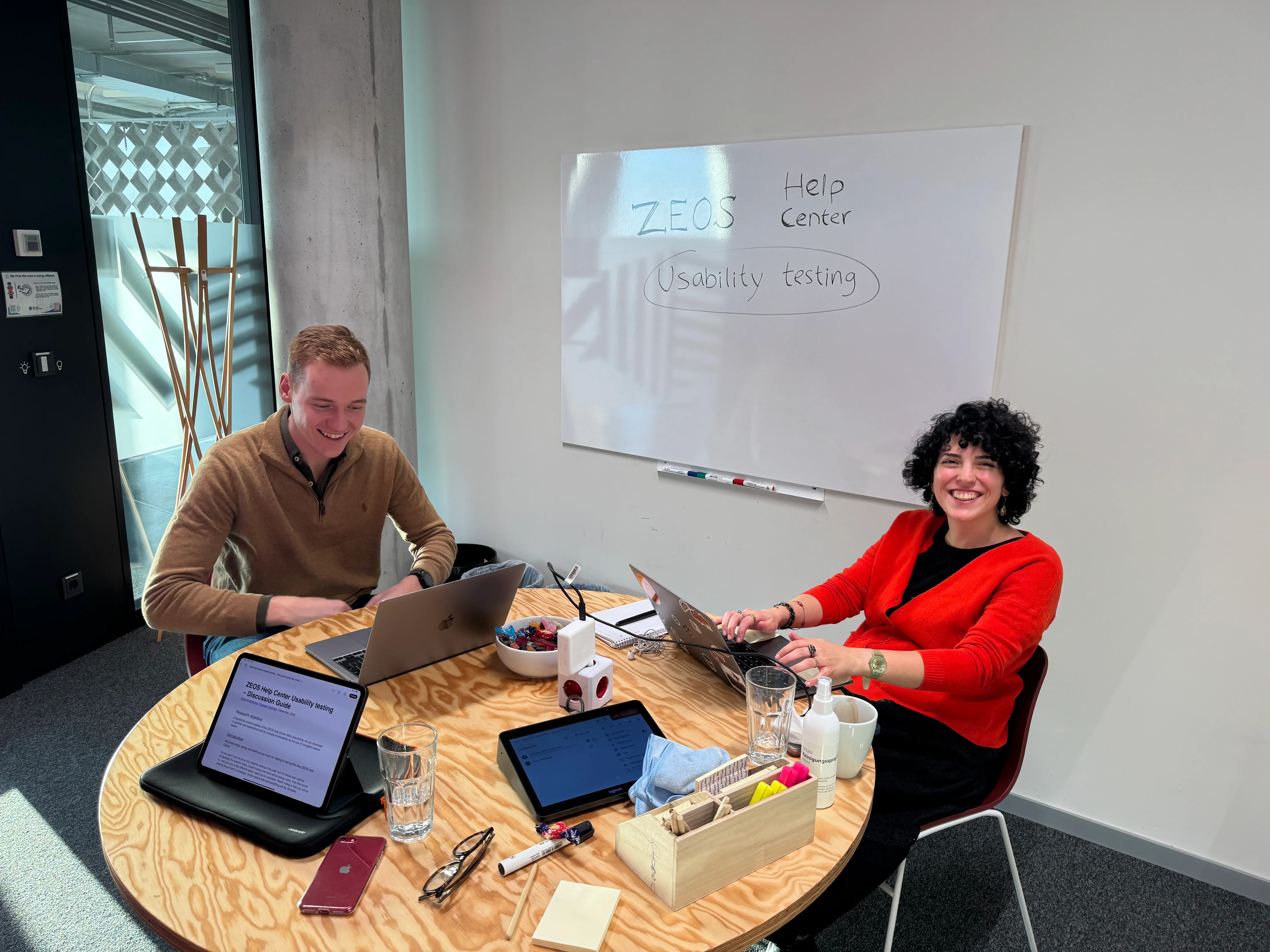
To validate the usability of the Help Center, we conducted moderated usability tests with eight participants representing different merchant profiles. While the overall structure and navigation of the Help Center held up well, the testing sessions revealed two important improvement areas: clearer copy of key navigational items, and the need for an even more sophisticated search experience.
These insights directly informed where we had to put our main focus prior to engineering handover. Luckily, neither of the learnings revelead concerns that would drastically influence the design to the extent where it would force us to go back to the drawing board.
Trade-offs & Launch decisions
While I generally prefer to bring in end-users as early on as possible in the design process, when changes are cheap, we felt confident to rely on the the extensive insights and data collected from the newly updated Partner University experience, and instead save the external involvement for the usability testing.
To enable a faster initial launch, we intentionally postponed the content management system (CMS) integration and hard-coded the first set of articles. This allowed us to validate the structure and usage patterns before investing in a more complex technical setup with Contentful.
Instead of hiding empty categories, we chose to keep placeholders visible on the landing page. This helped establish a clear mental model for users and signalled the intended scope of the Help Center, while setting expectations for future content expansion.
Landing Page
The front door to self-service. A unified entry point that prioritizes the most common user issues, reducing support ticket volume by anticipating needs before they arise.
Browse Section
Intuitive discovery. We moved away from rigid hierarchies to a fluid, topic-based navigation that helps merchants explore complex logistics rules without feeling overwhelmed.
Search Results
Instant clarity. A redesigned search experience that doesn't just match keywords, but understands merchant intent—delivering the right policy documents in milliseconds.
Article Page
Actionable knowledge. Articles aren't just text; they are interactive guides. Features like 'Quick Links' and 'Related Tools' bridge the gap between learning and doing.
Outcome & Impact
Reduced dependency on our support teams for common hurdles. Faster onboarding for brand new merchants. A foundation for scaling documentation alongside the product.
Reflections
At a first glance, it's easy to think designing a Help Center is a content project, but it became evident that it is so much more – it's a highly operational product. It required understanding of the inner workings of our organization; ownerships, incentives how information and knowledge flows.
TL;DR
In close partnership with Product, I defined the long-term vision and three-horizon roadmap for the ZEOS Support Ecosystem, transitioning the platform from high-touch manual support to a scalable self-service model.
Strategic Roadmap: Co-authored the vision for support capabilities, aligning technical feasibility with a long-term merchant-first user experience and gap analysis of the market.
0-to-1 Product Leadership: Led the end-to-end design of the ZEOS Help Center, covering everything from user journeys and information architecture to usability testing and engineering handover.
Systemic Thinking: Architected new support components, as an extension to our design system, now leveraged by the ZEOS Developer Portal, driving cross-user interface and experience consistency.
Future-Proofing: Established the foundation for upcoming AI-driven support and contextual in-portal help capabilities, directly reducing dependency on manual partner care agents which not only saves the merchant time but also reduces costs for Zalando.